Kodas: the creatures that came with the land
Kodas are the native beings of Otherside — the tall, masked creatures that Yuga's lore says ushered everyone into this world. They started as the golden ticket of the original land sale: 10,000 of the 100,000 Otherdeeds came with a Koda standing on the plot. Today most Kodas are their own separate NFT collection, but 1,683 deeds still carry theirs — and those deeds are a category of their own, because one wrapper holds two economically distinct assets.
From deed trait to standalone collection
For the first year, a Koda was inseparable from its land — buy the deed, get the Koda. Then in April 2023 Yuga opened the Koda decoupling: burn your original Otherdeed, and you'd receive an Otherdeed Expanded for the same plot plus your Koda as an independent NFT. About a quarter of all Kodas were claimed within the first 12 hours, which tells you how eager holders were to trade the two assets separately. The event never closed, and the split-off Kodas now trade as the "Otherside Koda" collection.
The holdouts
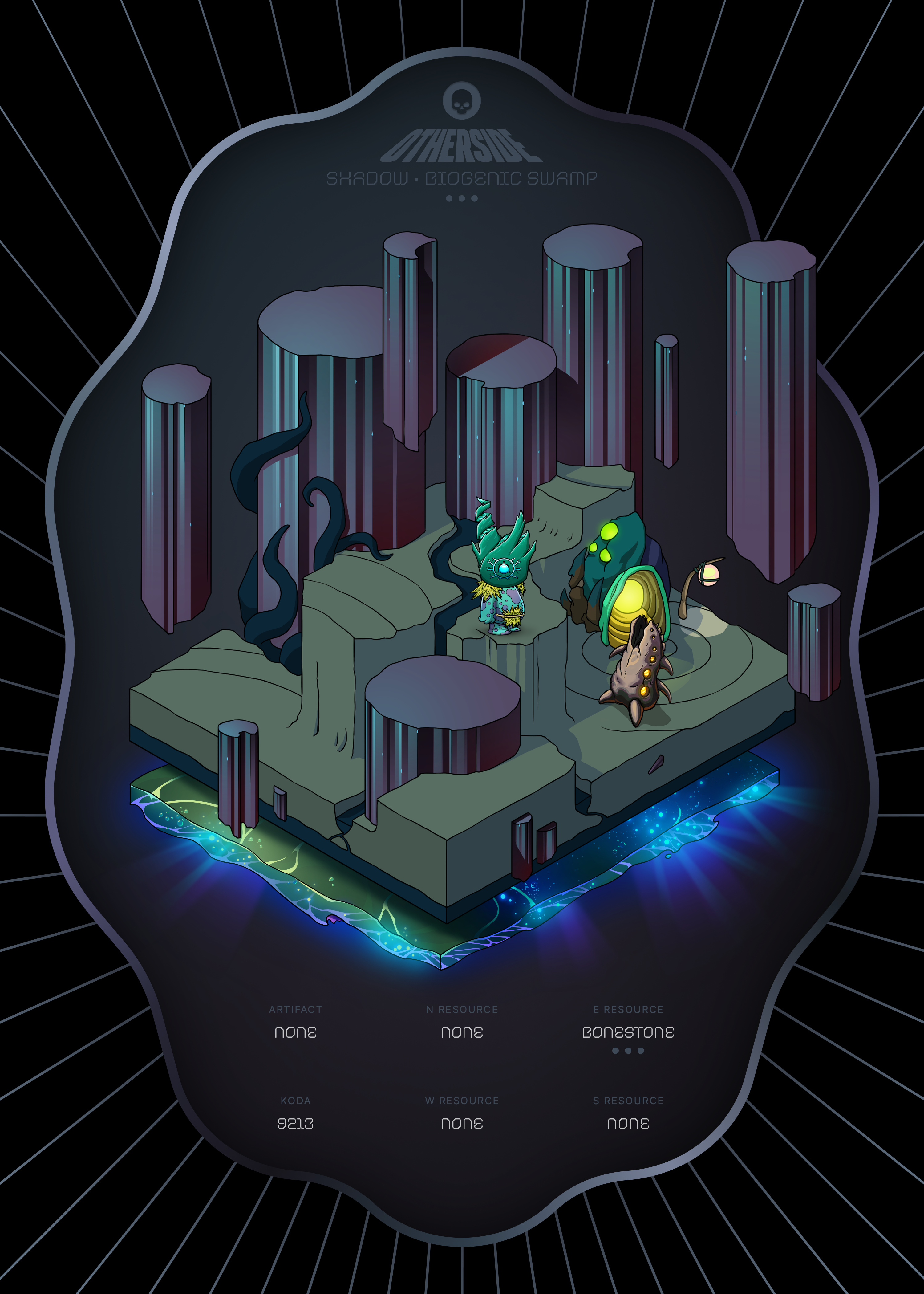
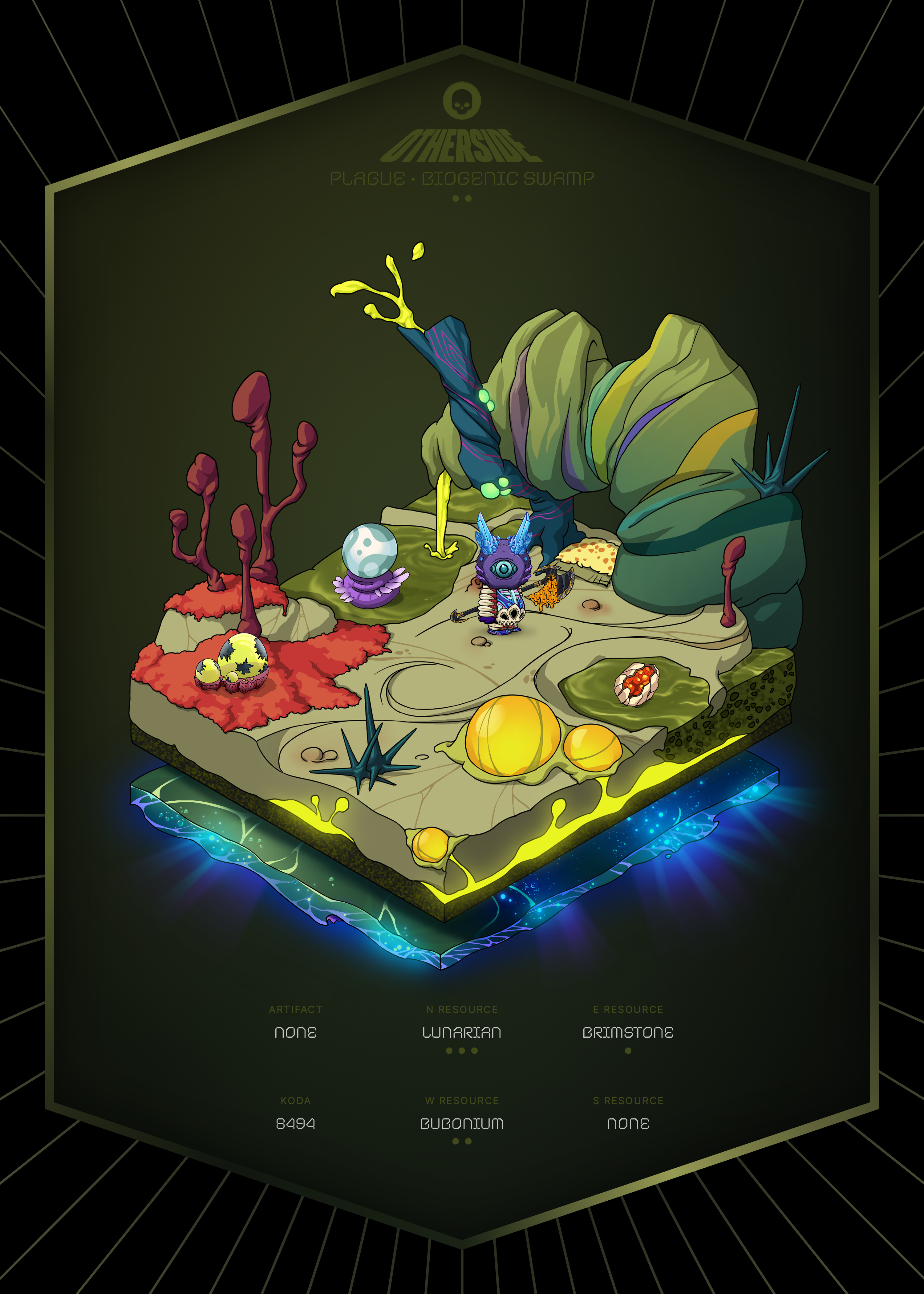
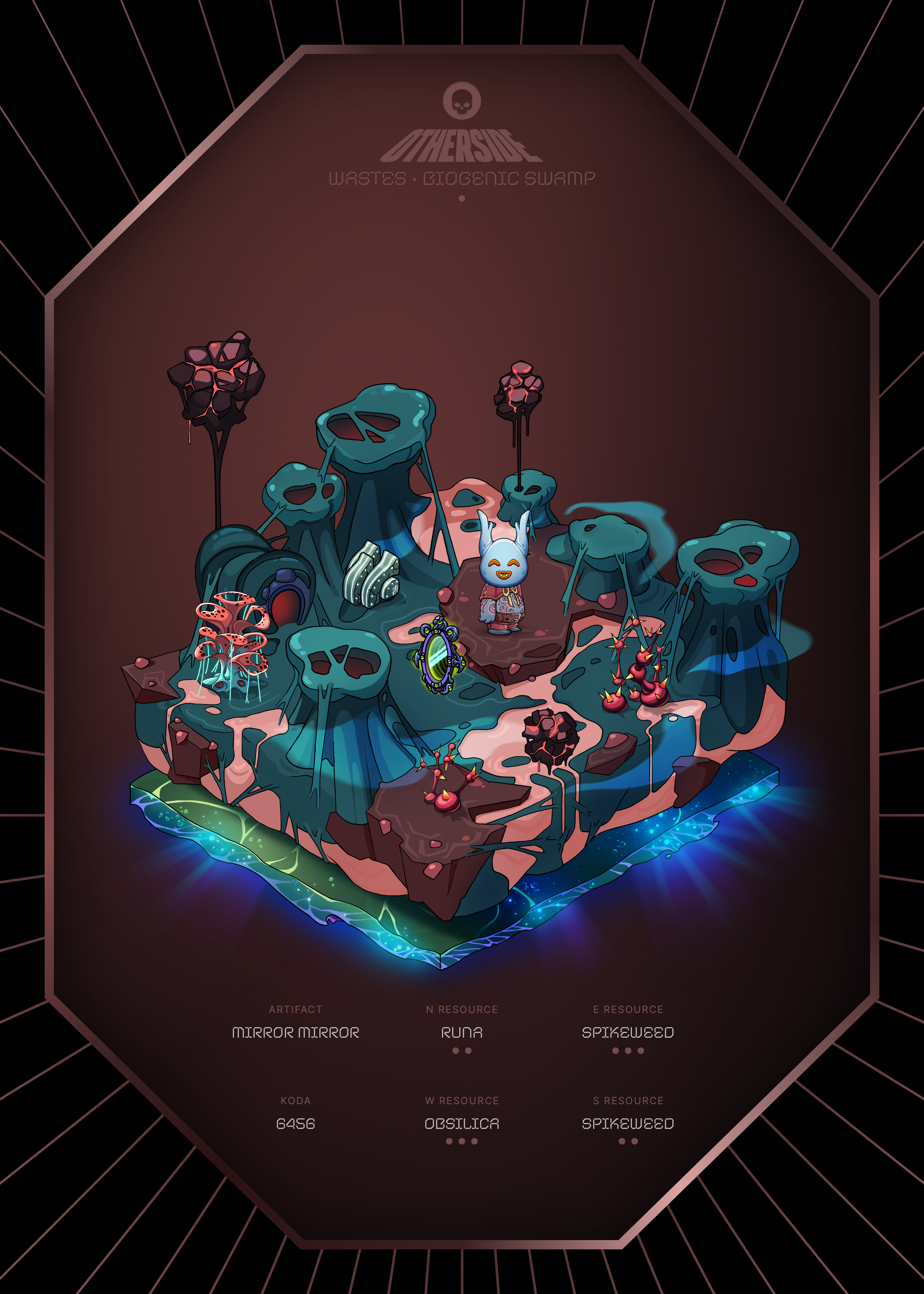
Which brings us to the interesting residue: 1,683 original deeds whose owners never burned. Those deeds still have a Koda in their metadata and standing on their artwork — one wrapper holding both the land and the creature, with the option to split still open. When you see a deed listing with a Koda badge, that's what you're looking at. But "has Koda" shouldn't be treated as a single universal premium, because the deed underneath still has its own environment, tier, sediment, deposits and history — and the Koda itself has its own traits and its own market.
Koda + deed rarity: the intersections
A still-fused Koda is already uncommon — 1.7% of the collection. But the deed under it can add layers, and because this site keeps every trait record, the intersections are countable rather than guessable: 377 Koda deeds also carry an artifact, 333 carry at least one rare resource, 35 carry two or more rare deposits, 158 fill all four resource slots, and just 31 pair the Koda with a rare or ultra-band artifact (our supply classification). Those are compound-rarity groups across systems that were never the same trait to begin with — the full framework is in What actually makes an Otherdeed rare.
What to verify before you believe a Koda listing
A deed whose Koda was decoupled years ago looks perfectly normal at a glance, and the marketplaces won't warn you. The metadata is the truth — if the Koda is still attached it appears as a trait with its Koda number, and it's drawn on the plot. And note: Koda Origins is a history marker from the burn event, not proof of a fused Koda — a real one shows its specific Koda number. Every deed page on this site shows the Koda as a badge only when it's verifiably still fused to the land, so check the deed's page before you take a listing's word for it.
How to think about the package
When evaluating a fused-Koda deed, think in layers: what is the land on its own, what is the attached Koda (the deed metadata records which Koda is aboard, so you can look the specific one up — the separate Koda collection has its own trait rarities and its own market), what other scarce deed traits are present, and how small is the group of deeds where those traits intersect? That's more useful than a flat "Koda premium" — and it's how the deed pages here are laid out.
Related reading: OG vs. Expanded — the full story of the burn · Obelisk pieces & badges — the other traces Otherside's history left on the deeds.
Sources
- Koda decoupling event, date and claim pace: NFT Culture — Guide to Koda Decoupling
- Original 1-in-10 Koda odds: nft now — Otherside guide
- The still-fused count and all Koda intersections: this site's live count of the original collection, refreshed at every build.