What actually makes an Otherdeed rare
"Is my Otherdeed rare?" sounds like a simple question. It isn't — and most of the answers floating around are folklore. An Otherdeed is a bundle of different trait systems, and rarity can come from at least three places: a scarce individual trait, an unusual level of density inside one trait system, or a rare intersection of several meaningful traits on the same deed. The first is easy to count. The third is where Otherdeeds get interesting. The nice thing about a 100,000-item collection with canonical metadata is that none of this is a matter of opinion — you can just count. So let's count.
Start with the counts
Out of exactly 100,000 plots (the two collections together, chain-deduplicated), every number below is counted live at each build:
| Trait | Deeds | Share |
|---|---|---|
| Empty — no deposits at all | 12,739 | 12.7% |
| All four resource slots filled | 8,841 | 8.8% |
| Carries any rare resource | 20,958 | 21.0% |
| Two or more tier-3 deposits (any class) | 3,972 | 4.0% |
| Carries an artifact | 21,335 | 21.3% |
| Still carries a Koda | 1,683 | 1.7% |
| Chaos environment | 111 | 0.11% |
Notice what that table implies: a "special" deed isn't that unusual — roughly one deed in three has something (a rare, an artifact, or a Koda). What's unusual is stacking. The rest of this page is about how to measure the stack.
Trait rarity: "how many of this exist?"
The simplest form. How many Chaos plots exist? (111.) How many deeds carry an Unknown Map? (60.) How many Dimensional deposits exist, and how many of those are tier 3? How many fused-Koda deeds remain? This is objective count information — if there are 60 copies, there are 60 — and every resource, artifact, environment and sediment page on this site states the exact figure.
Tier rarity: the trait inside the trait
Many traits have a second layer. Environments have an Environment Tier; sediments have a sediment tier; deposits have a resource tier. So "has resource X" is not specific enough — a rare resource at tier 1 and the same resource at tier 3 can have very different populations. Aurelian, for instance, has 202 deposits in the world, but only 34 of them are tier 3. That's why deed pages here print the exact tier-specific counts next to every deposit, not just the name.
Density rarity: how loaded is the plot?
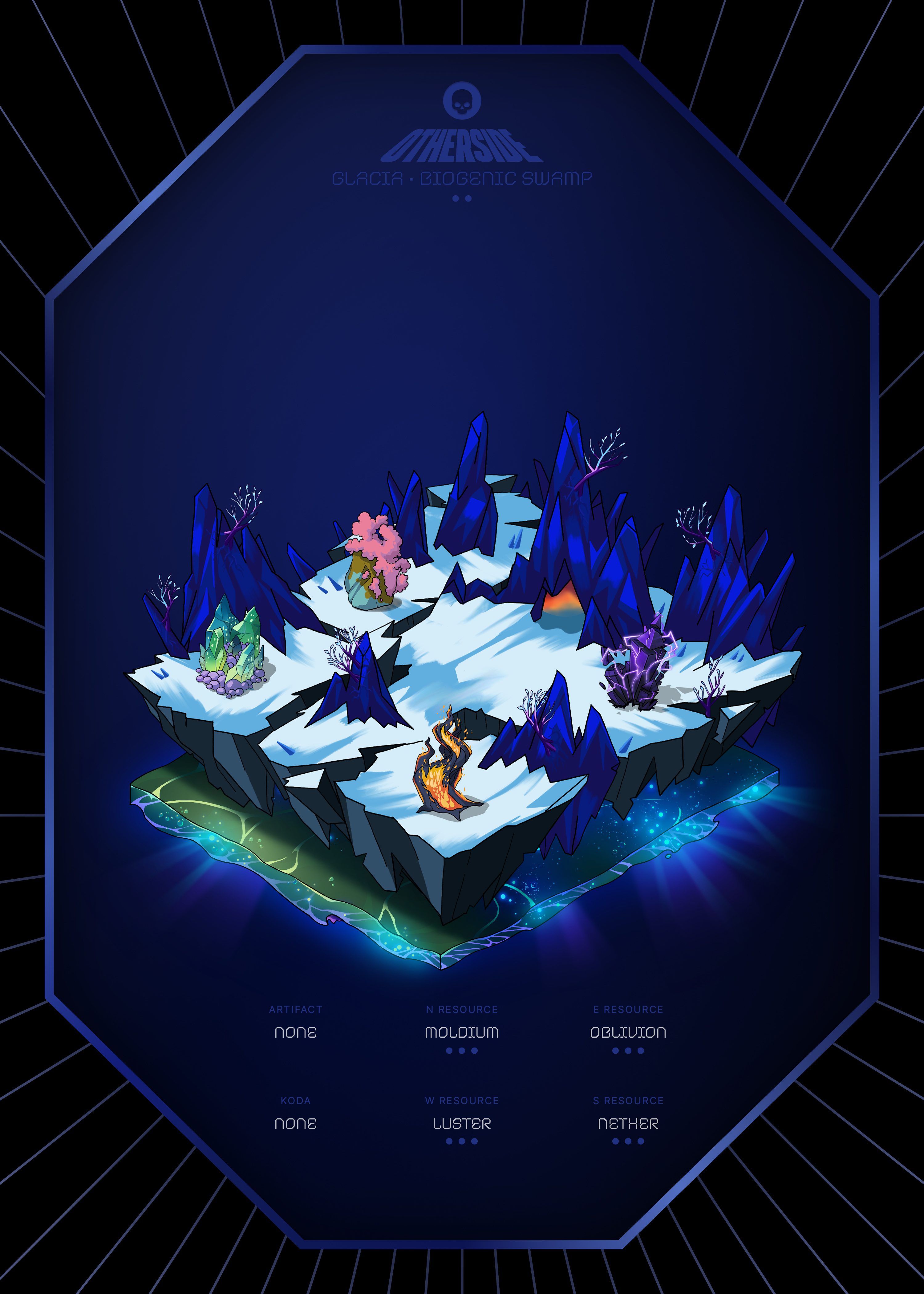
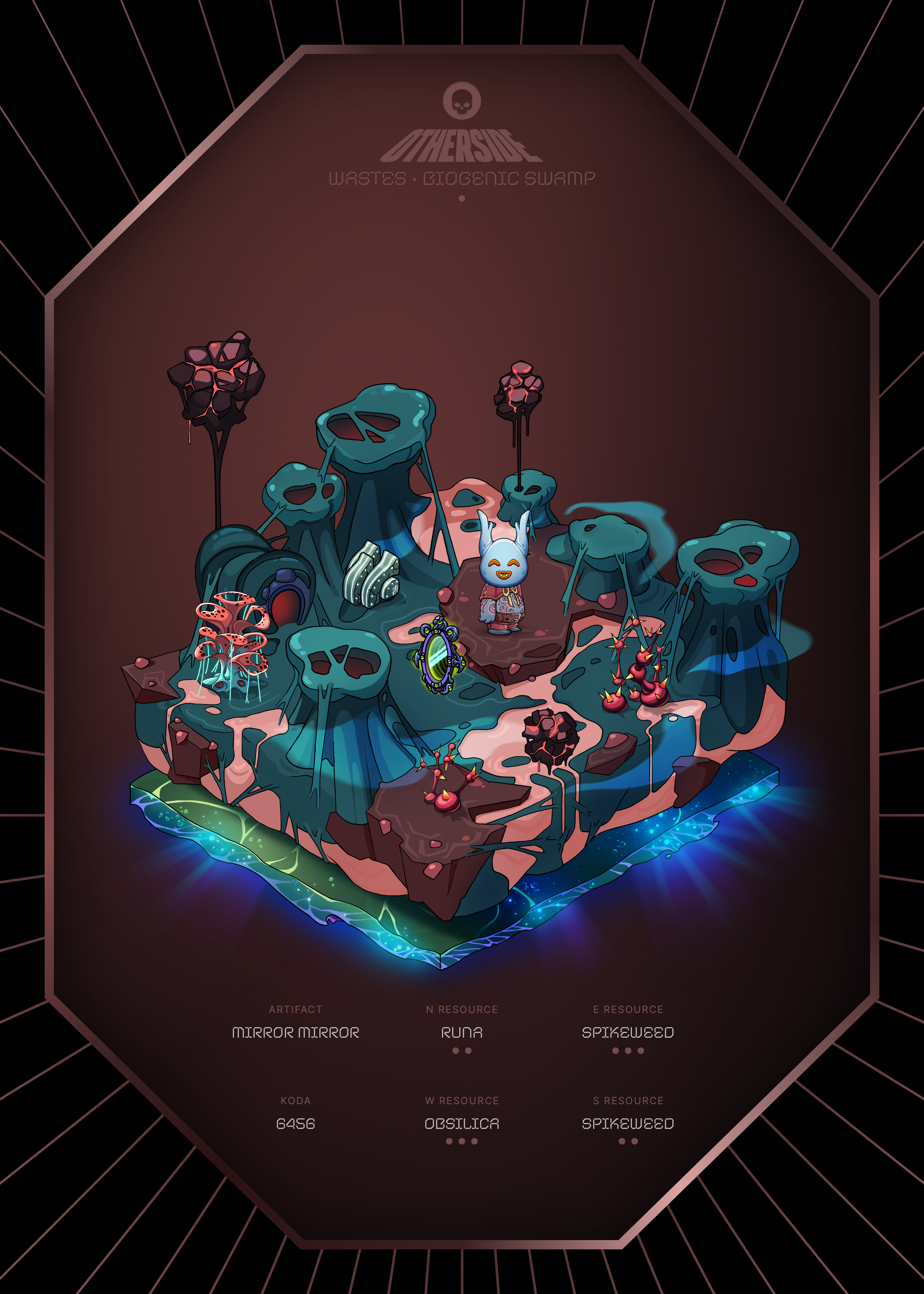
Resources add a concept the other traits don't have: concentration. A deed can have zero to four deposits (slot density), and each deposit carries its tier, so the tier total runs from 0 to a theoretical 12 (tier density). Two "four-slot deeds" can be very different assets — four tier-1 commons is density 4/12; two tier-3 rares plus a T2 and a T1 is density 9/12. Both sentences start with "it has four deposits." Only one of them describes a loaded plot.

Compound rarity: "how many deeds have all of these?"
This is the central idea of the whole guide. Suppose a deed has a rare resource, an artifact and four filled slots. You can count each trait separately — but the useful deed-level question is: how many of the 100,000 plots have all three at once? That's compound rarity, and it's a different, always-smaller number. Rare-resource concentration is the clearest example, so here is the live counts:
| Condition | Deeds | Share of 100,000 |
|---|---|---|
| At least 1 rare-resource deposit | 20,958 | 21.0% |
| At least 2 rare-resource deposits | 2,122 | 2.1% |
| At least 2 distinct rare resources | 1,223 | 1.2% |
| At least 2 rare deposits at tier 2+ | 617 | 0.62% |
| At least 2 rare deposits at tier 3 | 115 | 0.11% |
| At least 3 rare-resource deposits | 220 | 0.22% |
One warning before you build combinations yourself: don't estimate intersections by multiplying percentages. Traits can be correlated by the way the land was generated — the extreme case is Chaos, where every one of the 111 plots is tier 5 and the four Chaos-exclusive resources exist nowhere else. "Chaos × tier 5 × Entropy" is not three independent dice rolls; it's mostly one. This site holds every trait record, so every number above is a direct count, never a probability estimate.
Duplicate rares: the same grail twice
A deed can carry the same rare resource more than once — 1,077 deeds do. That's a different collector profile from two unrelated rares. Spiritseep, for example, has 394 carrier deeds but 414 deposits — the gap is plots carrying it twice, and "one of the deeds with double Spiritseep" is a far smaller category than the top-line supply suggests. Even #2311, the famous Chaos deed, gets part of its identity this way: double Entropy and double Omni.
Cross-system stacks: artifact, Koda, terrain
The same intersection logic applies across trait systems, and this is where the truly small categories live. Counted from the current data:
| Intersection | Deeds |
|---|---|
| Artifact + at least 1 rare resource | 4,548 |
| Artifact + 2 or more rare deposits | 476 |
| Artifact + all four slots filled | 1,904 |
| Rare/ultra-band artifact + rare resource | 562 |
| Koda + artifact | 377 |
| Koda + rare resource | 333 |
| Koda + 2 or more rare deposits | 35 |
| Koda + rare/ultra-band artifact | 31 |
(The artifact bands are a Mr. Deeds supply classification, not official Yuga tiers.)
A worked progression
Think of rarity as narrowing the population. Start with 100,000 deeds. Filter to any rare resource: 20,958. Require two or more rare deposits: 2,122. Also carrying an artifact: 476. Also Environment Tier 4 or 5: 127 deeds. That last number is an actual compound-rarity group — not a guess, a count. The lesson isn't that more filters make something valuable; it's that deed rarity is an intersection problem, and intersections have to be counted.
Don't manufacture fake "1 of 1s"
With enough metadata, almost every NFT can be made to sound unique: "only one deed has exactly this environment, this sediment, these four resources in these exact compass positions and this plot number." Mathematically true, economically meaningless. A useful rarity claim is built from traits people plausibly care about — two rares plus an artifact, a T3 rare plus a grail artifact, a Koda plus an artifact, a scarce environment plus multiple rares. Arbitrary combinations selected after staring at one token until the count reaches one are numerology, not analysis.
Rarity is not desirability, utility, liquidity or value
Five different questions, worth keeping separate. Rarity: how much supply exists? Desirability: how much do collectors care? Utility: what does the trait actually do in-world? Liquidity: how many real buyers and sellers are active? Market value: what are arm's-length transactions clearing for? A trait can be scarce and ignored; another can be more common with fierce demand because of appearance, lore or expected utility. This site uses exact data for the first question and sales data for the last — and the model deliberately never substitutes one for the other.
The rarity profile: better than a score
You'll notice this site never prints "rarity rank #342." A single score has to pretend all the dimensions above collapse into one number. A rarity profile is more honest — for example: terrain (Acid, 1,402 plots; tier 5 — and exactly 127 plots are both), resources (4/4 slots, density 9/12, two rare deposits, one T3), artifact (supply 60), compound (2+ rares + artifact: 476; add tier 4–5 land: 127). Every deed page here is built to let you read that profile in about sixty seconds: supply context on every trait card, exact tier populations, and links from each trait to its full carrier list.
Five deed archetypes
Almost every deed you'll meet is one of these. The empty deed — common terrain, low tier, no deposits, no artifact; 12.7% of the collection derives no rarity from traits at all. The dense common — four slots and high tier density with every resource common: density rarity without rare-resource rarity. The single grail — one extremely scarce T3 rare dominating an otherwise ordinary plot. The multi-rare — two or more rares, smaller again if they're deep-tier. The stacked deed — scarce environment, high tier, multiple rares, artifact, perhaps a Koda or history trait: compound rarity across systems that were never the same trait to begin with.
The shortest version
If you remember three lines from this guide, make them these. Trait rarity asks: how many of this exist? Compound rarity asks: how many deeds have this meaningful combination? Market value asks: what are buyers actually paying? Three different questions — and a good Otherdeed analysis keeps them separate.
Next: How to read a deed page — where all of these layers are shown on one asset.
Sources
- Every figure on this page: this site's full-collection count via
api.otherside.xyz, chain-deduplicated so burned originals aren't double-counted. Compound counts are computed per-deed at every build — they are direct intersections, never estimates.