What is Otherside? A plain-English guide to Yuga Labs’ metaverse
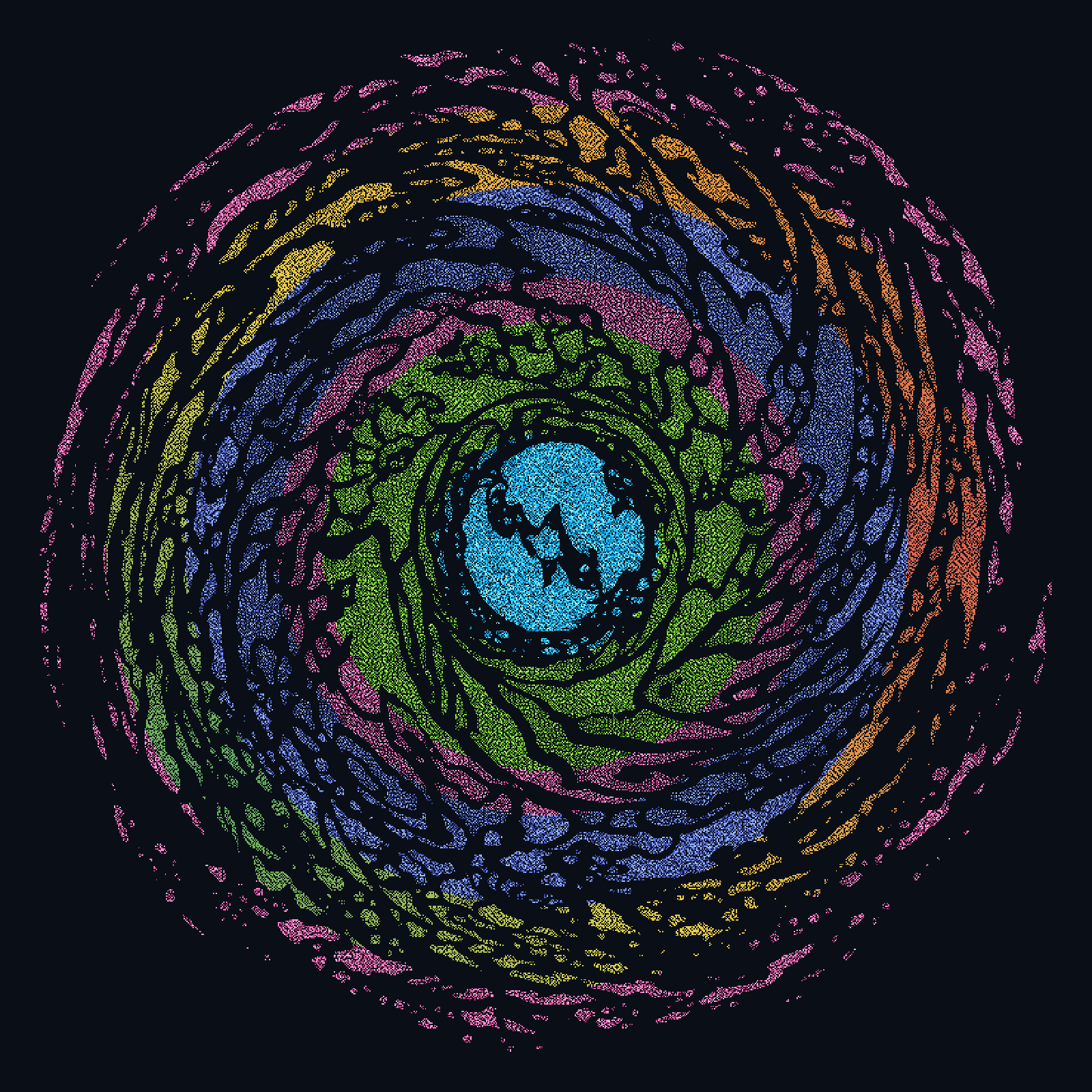
Otherside is the metaverse world built by Yuga Labs — the same company behind the Bored Ape Yacht Club. It's a huge map of 100,000 plots of land, and each plot is an NFT called an Otherdeed. That one sentence is the easy part. What makes Otherside unusual is how much information is attached to the land itself — and I've spent an unreasonable amount of time studying it, so let me give you the plain-English version of what this place actually is.
The short history
Yuga Labs announced Otherside in March 2022 and sold the land on April 30, 2022. It was, at the time, one of the biggest NFT launches ever: 55,000 plots went on public sale at 305 ApeCoin each (roughly $6,100 that day), and another 45,000 were reserved for Bored Ape and Mutant Ape holders, Yuga, and partners. Demand was so violent that Ethereum gas fees spiked past the price of the land itself for a while — people paid thousands of dollars just for the transaction. Whatever you think of that day, it tells you how much attention this world had from the start.
Since then, Otherside has run live playable demos — the "First Trip" on July 16, 2022 put about 4,500 people in one shared world at once, and the "Second Trip" on March 25, 2023 topped 7,000. Some early participation is even reflected in deed metadata — eligible First Trip Voyagers could activate an Obelisk Piece on their land, a very Otherside way of doing things. More on that in the badges article. In 2023 Yuga also shipped Legends of the Mara, a lighter strategy game that matters here for one reason: it demonstrated that land traits were not merely cosmetic. Your deed's environment tier set worker capacity and its sediment determined what you could farm.
What the land actually is
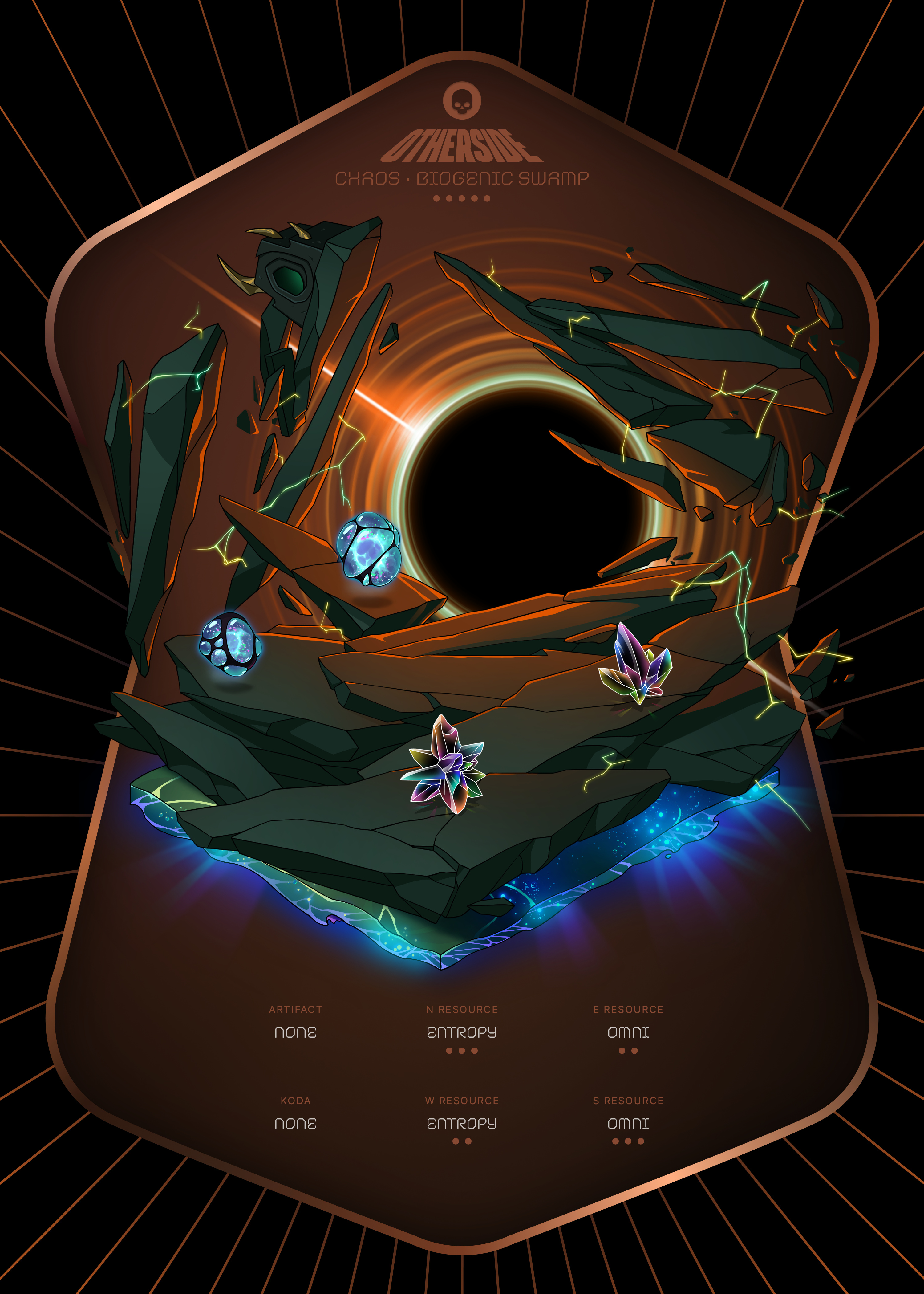
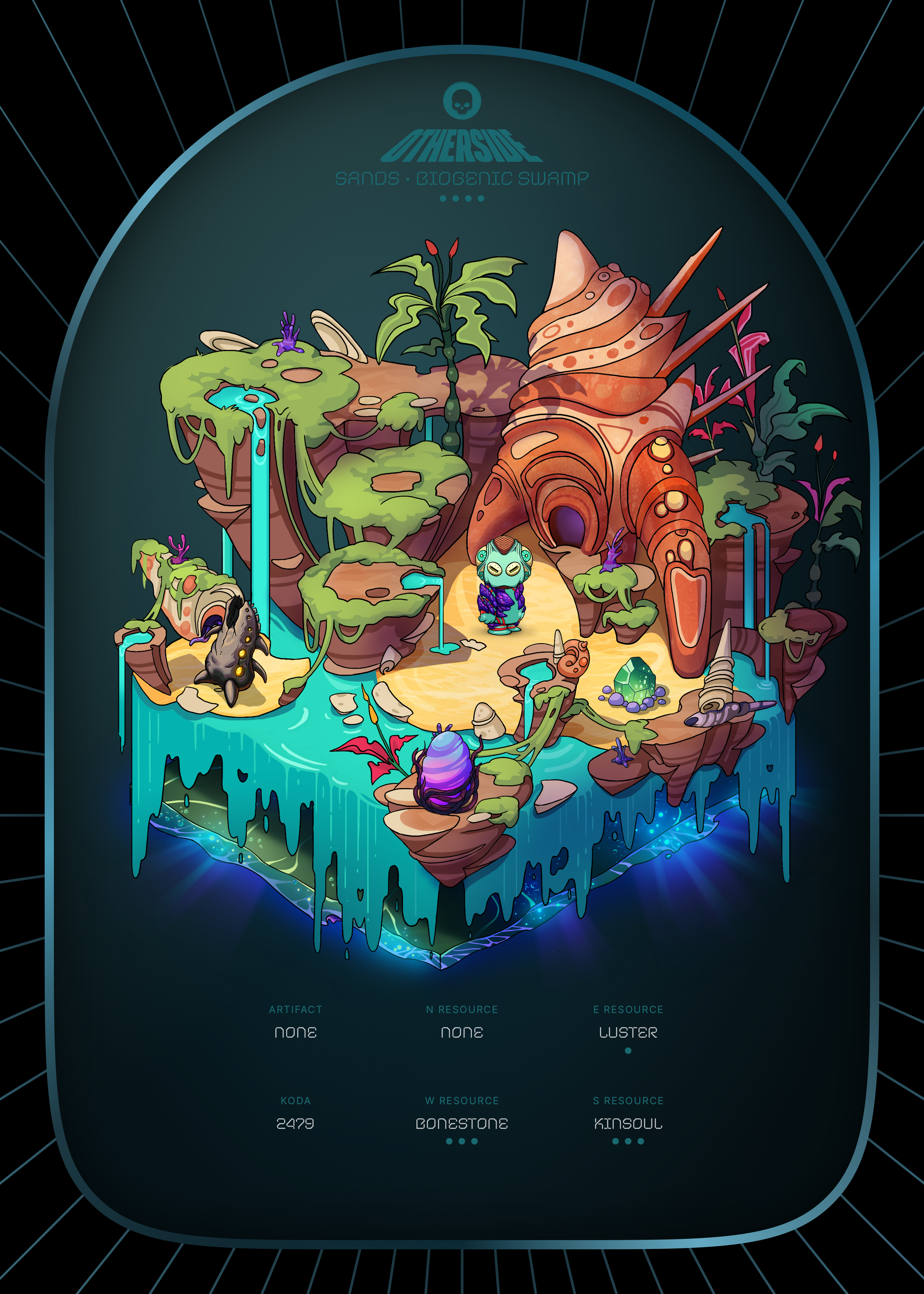
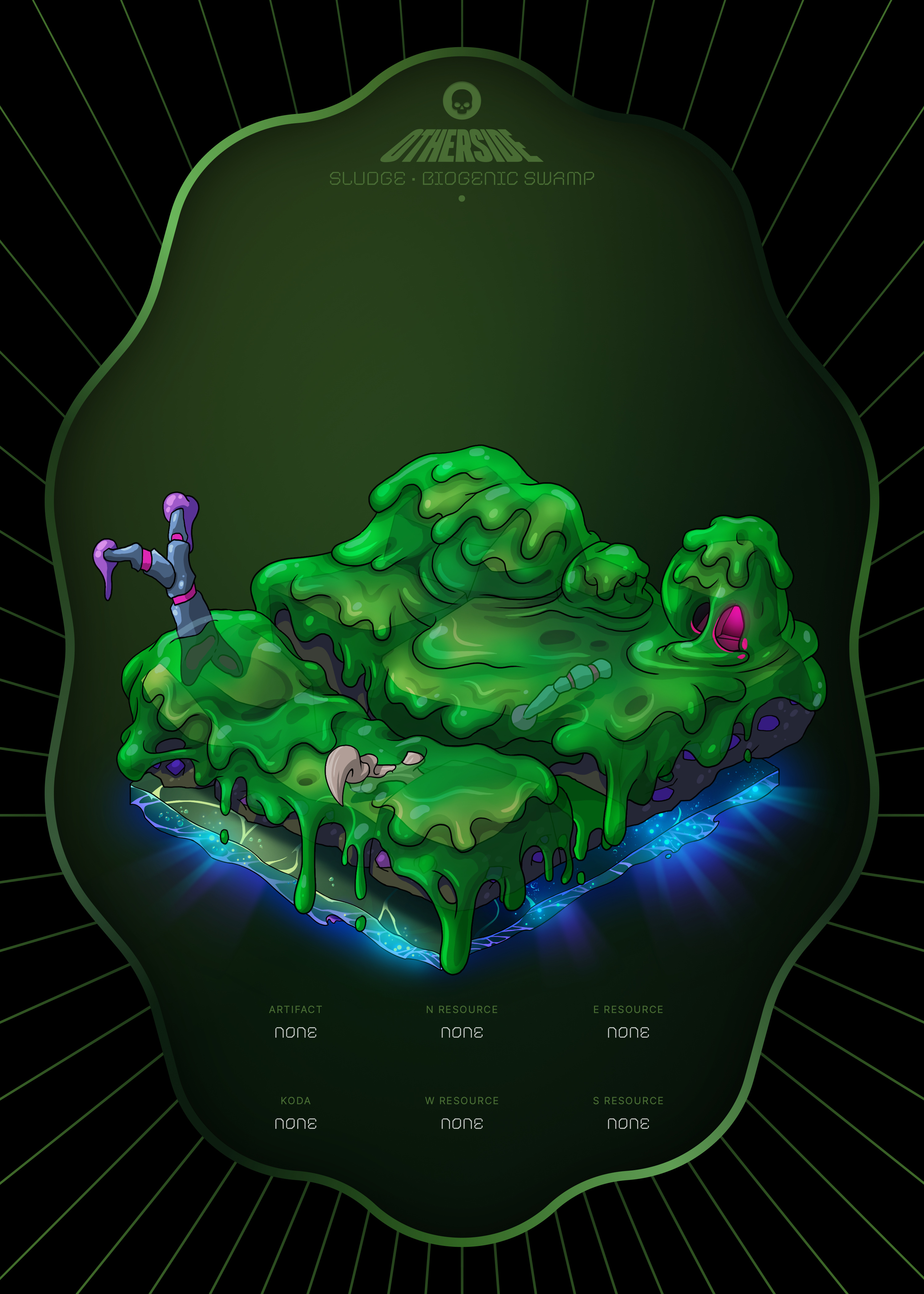
A plot is not just a coordinate. Every deed's canonical metadata describes the land: an environment (the kind of landscape — there are 29), an Environment Tier from 1 to 5 (effectively the plot-size trait), a sediment layer at tier 1–3, up to four resource deposits each with its own type and tier, sometimes an artifact, on a lucky few a Koda — the mysterious native creatures of Otherside — and, on some plots, history traits tied to events and gameplay. The artwork isn't decorative: the core visual traits — terrain, deposits, artifact, Koda — are rendered directly on the plot. A loaded deed should look loaded.
Why the traits matter
If every deed were an interchangeable pieces of land, analyzing them would be simple. They are not. A common tier-1 plot with no deposits, a four-slot deed with several tier-3 deposits, a deed carrying two rare resources, a scarce environment paired with an artifact, an original deed still holding a Koda, and a plot carrying several of those features at once — those are different assets, even though all of them are "Otherdeeds." That's why the rest of this guide spends more time on the traits than on the metaverse history.
One world, two collections
If you look Otherside up on a marketplace you'll find two deed collections — the original Otherdeeds and "Otherdeed Expanded." That's not a knock-off; it's the result of a 2023 event where holders could split their deed apart. About 70,000 deeds have made the jump and about 30,000 remain in the original wrapper — but together they still represent the same 100,000 plots, and every plot lives in exactly one of the two at a time. The full story is in Otherdeed vs. Otherdeed Expanded, and it's worth two minutes before you buy anything.
Scarcity is multidimensional
A final idea before moving on: rarity in Otherside is not one leaderboard. A deed can be rare because one trait has very low supply — that part is easy. It can also be rare because several individually less-rare traits occur together. A 60-supply artifact is simple to understand; but how many of those 60 carrier deeds also hold a rare resource? How many fill all four slots? How many sit on scarce tier-5 land? Those intersections are where deed-level rarity becomes more interesting than trait rarity, and they're countable — this site counts them from the raw data rather than guessing. The full framework is in What actually makes an Otherdeed rare.
Where things stand today
Otherside stopped being a promise a while ago. It opened The Swamp to the public in alpha in July 2025, and on November 12, 2025 officially opened its doors to everyone with Koda Nexus, a social hub that's been expanding with new games and locations since. You don't even need a wallet to walk around, though holders can connect their land and activate their Kodas. The world has now been live for over a year, and how it grows from here — and what role the land plays in it — is the story everyone here is watching. What's fully concrete meanwhile is the land itself: 100,000 plots with defined, verifiable trait metadata and an active market. That concrete part — the deeds, their traits, and what the market actually pays for them — is what this site catalogs, one page per deed, the whole collection.
Where to go next: What is an Otherdeed? walks through a deed trait by trait. Or just open the browser and click around the map — that's how I got hooked.
Sources
- Launch details, sale structure and gas-war coverage: nft now — Otherside: Everything to Know
- First Trip date and player counts: @tpan — Otherside's First Trip
- Second Trip player counts: CoinDesk — Second Trip
- Persistent-world timeline: Otherside official FAQ — The Swamp alpha (July 2025), Koda Nexus (November 2025) · BlockchainGamer — Otherside officially opens November 12, 2025
- Trait counts: chain-deduplicated across the full collection via
api.otherside.xyz— the numbers behind every figure on this site.